
Cards and stationery
Size, stock and finish shape a printed card. Artwork needs trim space and clear information. Compare tactile finishes with readability, especially for fine type and small graphic details.
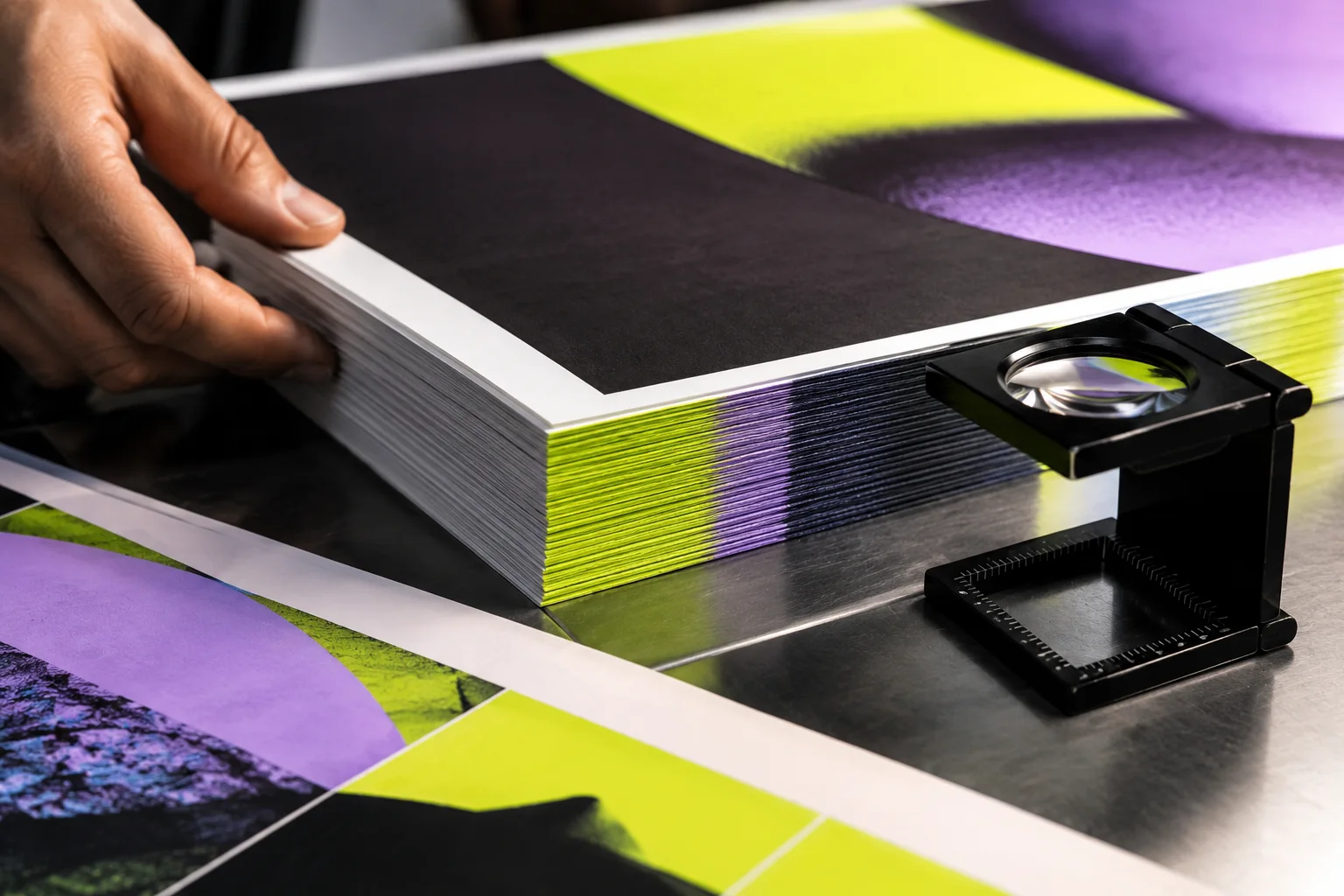
Include final dimensions, application and print-ready files where available. Embed or appropriately outline fonts and check image quality at the output size. Confirm permissions for artwork and logos. A physical colour reference and material sample give a more useful discussion than relying only on screen appearance.
Size, stock and finish shape a printed card. Artwork needs trim space and clear information. Compare tactile finishes with readability, especially for fine type and small graphic details.
Packaging combines graphics with folds, joins and the object it holds. A structural sample helps inspect those relationships. Review dieline, artwork placement and finishing as one connected brief.
Describe purpose, dimensions, surface and use.
Size, stock and finish shape a printed card. Artwork needs trim space and clear information. Compare tactile finishes with readability, especially for fine type and small graphic details.
Viewing distance, installation and the intended surface guide large-format work. Keep essential content clear of edges and fittings. Files should match the final dimensions and required image quality.
A label must suit its surface and handling conditions. Shape, adhesive needs and finish influence the material. Include the intended cut line and sufficient space around fine details.
Packaging combines graphics with folds, joins and the object it holds. A structural sample helps inspect those relationships. Review dieline, artwork placement and finishing as one connected brief.
Describe the topic and the need you would like to discuss. Relevant details help the team respond in the context of your request.
Our studio method treats production details as design information. Stock, ink, cutting and folding change how a piece is experienced. Artwork preparation and proof discussions remain connected with the original brief. Careful file organisation distinguishes a design revision from a production adjustment.
Describe purpose, dimensions, surface and use.
Check format, trim, bleed and image quality.
Compare content positions, colours and finishes.
Confirm materials and practical handling details.
Viewing distance, installation and the intended surface guide large-format work. Keep essential content clear of edges and fittings. Files should match the final dimensions and required image quality.
A label must suit its surface and handling conditions. Shape, adhesive needs and finish influence the material. Include the intended cut line and sufficient space around fine details.